Wrist & Hand Injury
Managing wrist and hand injuries in sport, from sprains and fractures to tendon and ligament damage.
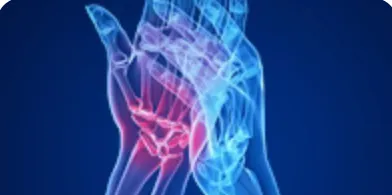
Overview
Wrist and hand injuries are extremely common in sport and frequently occur as an athlete instinctively puts out their hands to break a fall. The injury spectrum ranges from minor sprains and contusions to fractures of the scaphoid, metacarpals and distal radius — all of which require careful assessment to exclude significant structural damage.
Certain injuries such as scaphoid fractures and mallet fingers are frequently missed initially due to relatively subtle symptoms, yet have significant consequences if not treated appropriately. A high index of suspicion and low threshold for X-ray is therefore important.
Common Causes
- Falling onto an outstretched hand (FOOSH) — the most common mechanism
- Direct impact from a ball, polo mallet or opponent
- Hyperextension or hyperflexion of the fingers or wrist
- Twisting injuries during wrestling or contact sport
- Repetitive loading of the wrist in racquet sports, gymnastics or cycling
- Crush injuries in equestrian environments
- Forced finger bending or jamming during ball sports
Signs and Symptoms
- Pain in the wrist or hand following injury
- Swelling and bruising over the affected area
- Tenderness in the anatomical snuffbox (may indicate scaphoid fracture)
- Pain on gripping or pinching
- Deformity of a finger or wrist following impact
- Inability to fully extend a finger tip (may indicate mallet finger)
- A 'dropped' or deformed finger suggesting fracture or dislocation
- Reduced grip strength
Immediate Actions
- Remove the athlete from play and assess the injury carefully
- Apply cooling to reduce swelling — do not apply ice directly to skin
- If fracture or dislocation is suspected, immobilise the wrist and hand with a splint
- Do not attempt to reduce a dislocation in the field without appropriate clinical training
- Elevate the hand above the level of the heart
- Arrange transfer to hospital for X-ray if there is any bony tenderness, deformity or inability to use the hand
- Apply a temporary splint and sling pending transfer if needed
When to Seek Medical Attention
- There is tenderness over any bony prominence of the wrist or hand
- A deformity of the finger or wrist is visible
- There is significant swelling or rapid bruising following trauma
- Grip strength is significantly reduced following injury
- There is an inability to fully straighten or bend the finger
- Any finger appears pale, cold or numb — may indicate vascular or nerve injury
- Symptoms persist beyond 48–72 hours without improvement
Prevention Advice
- Wear wrist guards in sports with a high fall risk — cycling, skateboarding, gymnastics
- Use sport-appropriate protective gloves where indicated (polo, cycling, hockey)
- Strengthen wrist and forearm muscle groups through targeted conditioning
- Learn appropriate falling technique for your sport to reduce impact loading
- Tape or splint previously injured fingers when returning to sport
- Address any residual weakness or stiffness with physiotherapy before return to play
Event Environment Considerations
- Event medical teams should carry rigid splinting material and bandages for wrist and hand immobilisation
- Scaphoid tenderness following a fall should always be referred for X-ray — do not clear for return to play
- Dislocated fingers may be splinted in position or reduced by a trained clinician — assess for associated fracture
- In equestrian and polo environments, hand injuries from falls and mallet contact can be severe
- All wrist and hand injuries should be documented and athletes advised on appropriate follow-up care
This guidance is provided for informational purposes only and does not replace professional medical advice or emergency medical care.