Strains & Sprains
Recognition, immediate management and return to activity guidance for muscle strains and ligament sprains in sport.
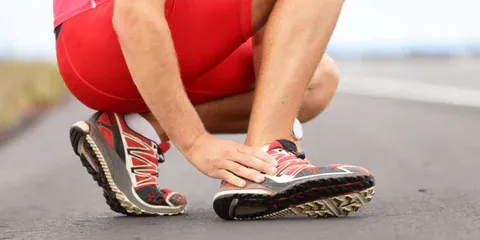
Overview
Sprains and strains are among the most common injuries in sport. A sprain involves stretching or tearing of a ligament — the connective tissue joining bones at a joint. A strain involves stretching or tearing of a muscle or tendon. Both injuries can range from mild (grade 1) to severe (grade 3, involving a complete tear).
These injuries occur across virtually every sporting discipline and can sideline athletes for days, weeks or months depending on severity. Early and correct management significantly influences recovery time and reduces the risk of re-injury.
Common Causes
- Sudden twisting or turning movements, particularly at speed
- Landing awkwardly from a jump or fall
- Direct contact or collision with another player
- Rapid changes in direction during competition
- Overexertion or pushing beyond physical limits during training
- Inadequate warm-up prior to activity
- Playing on uneven or poorly maintained surfaces
- Fatigue causing reduced coordination and muscle control
Signs and Symptoms
- Pain at the site of injury, which may be sharp or dull
- Localised swelling developing rapidly after injury
- Bruising appearing within hours of injury
- Tenderness on palpation of the affected area
- Reduced range of movement at the affected joint or muscle
- Muscle spasm or cramping around the injury site
- Difficulty bearing weight or using the injured limb
- A popping or snapping sensation at the time of injury (may indicate a more severe tear)
Immediate Actions
Apply the PRICE protocol immediately following injury:
- Protection — protect the injured area from further harm
- Rest — stop the activity and rest the injured part
- Ice / Cooling — apply ice or an evaporative cooling wrap to reduce swelling (do not apply ice directly to skin)
- Compression — apply a compression bandage to limit swelling
- Elevation — raise the injured limb above heart level where possible
When to Seek Medical Attention
- There was a loud pop or snap at the time of injury
- The joint appears deformed or has visible bruising crossing a joint line
- The athlete cannot bear weight after 10 minutes of rest
- Numbness or tingling develops in the limb
- Swelling is severe or rapidly worsening
- Symptoms do not improve within 48–72 hours
- There is concern about the possibility of a fracture
Prevention Advice
- Always warm up properly before training and competition
- Strengthen the muscles around vulnerable joints through sport-specific conditioning
- Wear appropriate footwear that provides support for your sport
- Maintain fitness levels to reduce fatigue-related injury risk
- Tape or brace previously injured joints when returning to sport
- Train on well-maintained, even surfaces wherever possible
- Cool down and stretch after exercise to maintain flexibility
Event Environment Considerations
- Event medical teams should carry compression bandages, cooling wraps and assessment equipment
- A quiet, sheltered assessment area should be designated away from the field of play
- Clinicians should assess neurovascular status distal to any significant sprain
- Decisions on continued participation must be made by a qualified clinician, not the athlete or coaching staff
- Documentation of the injury and management should be completed and provided to the athlete
- Transport to hospital should be arranged promptly if a fracture or complete tear is suspected
This guidance is provided for informational purposes only and does not replace professional medical advice or emergency medical care.