Fractures & Dislocations
Recognition and immediate management of suspected fractures and joint dislocations in sporting environments.
Overview
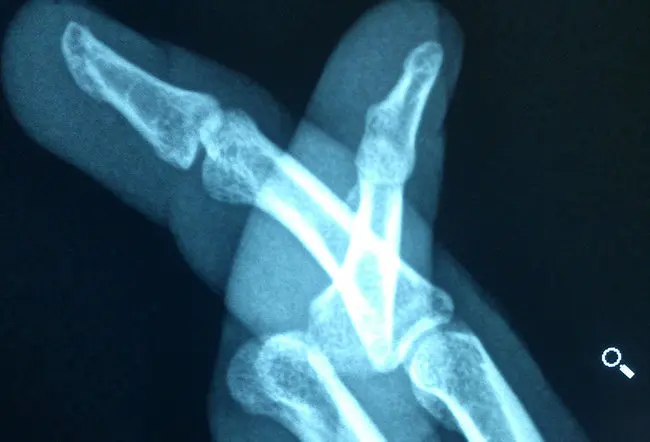
A fracture is a break or crack in a bone. Dislocations occur when the bones forming a joint are forced out of their normal position. Both injuries are common across a wide range of sports and can vary significantly in severity, from minor stress fractures to complex open fractures requiring immediate surgical intervention.
In sporting environments, fractures and dislocations most commonly result from direct impact, falls or twisting forces. They can affect any bone or joint in the body but are particularly common in the wrist, collarbone, ankle, shoulder and fingers. Correct initial management is essential to minimise pain, prevent further injury and support the best possible outcome for the athlete.
Common Causes
- Falls from height, including from horses in equestrian and polo sport
- High-speed cycling crashes with impact to the ground
- Direct impact from another player, polo mallet or sporting equipment
- Twisting or landing forces on limbs, particularly ankles and wrists
- Stress fractures from repetitive loading over time
- Shoulder dislocations from falls on an outstretched arm
- Finger fractures and dislocations from ball impacts
- Collarbone fractures from falls in cycling, equestrian sport and contact sports
Signs and Symptoms
- Severe pain at or near the injury site
- Significant swelling developing rapidly
- Bruising or discolouration around the area
- Visible deformity or abnormal shape of the limb or joint
- Inability to move the affected limb or joint
- A sensation or audible sound of a crack at the time of injury
- Tenderness when the area is touched
- Numbness, tingling or loss of sensation (may indicate nerve involvement)
- Pale or mottled skin distal to the injury (may indicate vascular compromise)
Immediate Actions
- Stop the activity and remove the athlete from the field of play
- Immobilise the limb in the position found — support with padding or improvised splinting
- Apply a cold pack wrapped in cloth to reduce swelling and pain — do not apply ice directly to skin
- Elevate the limb where possible and comfortable
- Assess circulation, sensation and movement (CSM) distal to the injury
- Monitor the athlete for signs of shock — pallor, rapid pulse, dizziness
- Seek immediate medical assessment for formal assessment and imaging
When to Call Emergency Services
- An open fracture is present (bone visible or wound over fracture site)
- Suspected pelvic, spinal or femoral (thigh bone) fracture
- Signs of significant blood loss or haemorrhage
- The limb appears pale, cold or the pulse is absent below the injury
- The athlete is showing signs of shock
- There is any associated loss of consciousness
- The mechanism of injury suggests a spinal injury may also be present
Event Environment Considerations
Fractures and dislocations are among the most common injuries managed by event medical teams at sporting events. Preparation and equipment are important:
- Event medical kits should include appropriate splinting materials and slings
- At polo and equestrian events, equipment must be accessible from the medical vehicle and deployable in a field setting
- Cycling events require medical teams to carry portable immobilisation equipment along the route
- In remote or rural event environments, early contact with ambulance services should be established in case hospital transfer is required
- Soft tissue padding and improvised splints can be effective when formal equipment is not immediately available
Prevention Advice
- Wear appropriate protective equipment including wrist guards, helmets, body armour and elbow pads
- Ensure adequate warm-up and cool-down as part of training and competition routines
- Strength and conditioning training to support joints and reduce fracture risk
- Inspect playing surfaces and event environments for hazards that increase fall risk
- Address technique errors in sports where poor biomechanics increase fracture risk
- Ensure adequate nutrition and calcium and vitamin D intake to maintain bone density
When to Seek Medical Assessment
All suspected fractures and dislocations should receive a formal medical assessment. This will typically include a clinical examination and imaging (X-ray) to confirm the diagnosis and guide management.
- Any limb or joint with suspected fracture or dislocation should be assessed at a minor injuries unit or emergency department
- Persistent swelling, bruising or reduced range of motion following an injury should be reviewed
- Athletes with a suspected stress fracture should be assessed by a sports medicine clinician
- Any injury with associated neurovascular symptoms (numbness, tingling or absent pulse) is urgent
This guidance is provided for informational purposes only and does not replace professional medical advice or emergency medical care.