Head Injuries in Equestrian Sport
Recognition and management of head injuries in polo, horse trials, showjumping and equestrian competitions.
Overview
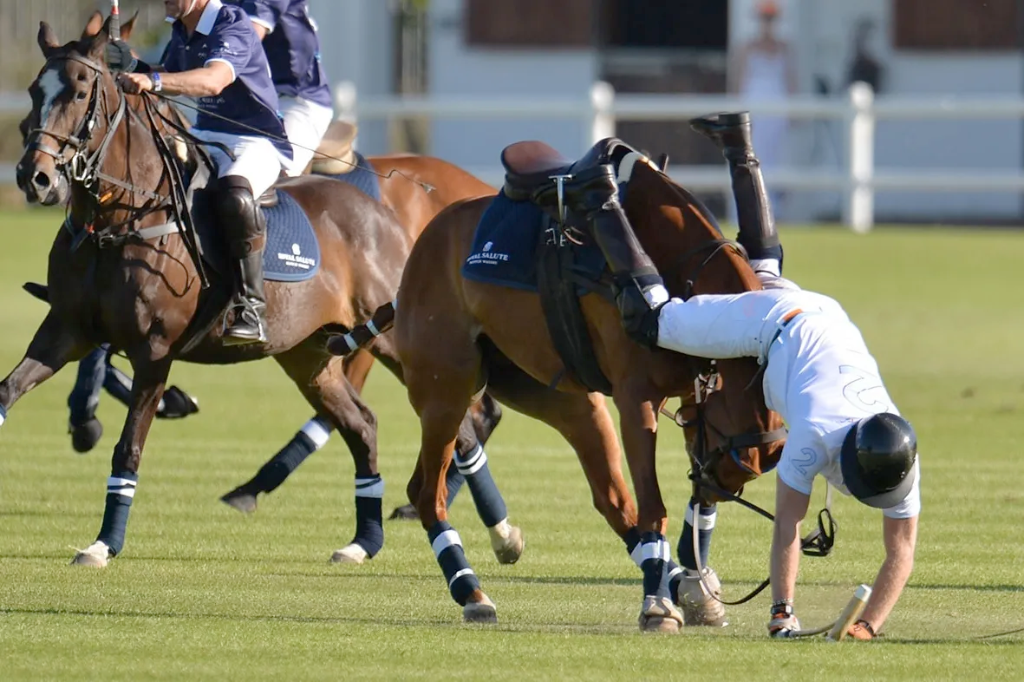
Equestrian sport carries a significant risk of head injury due to falls from height, contact with horses, polo mallet impacts and collisions with fencing and equipment. Head injuries in equestrian sport can range from minor concussions to severe traumatic brain injuries and spinal cord injuries.
Riders in polo, cross-country, showjumping, racing and other equestrian disciplines are at elevated risk compared to many other sports due to the height of the fall and the unpredictable nature of the horse. All head injuries in equestrian sport should be taken seriously, even when a helmet was worn at the time of the incident.
Typical Injury Mechanisms
- Falls from the horse with impact to the head or neck on the ground
- Being struck by a horse's hoof — particularly dangerous given the force generated
- Polo mallet contact to the head during a ride-off or fall
- Collision with fencing, posts or course infrastructure
- Being sandwiched between horses during polo or other equestrian competition
- Horse rolling on the rider following a fall
- Impact with showjumping poles or cross-country obstacles
Signs and Symptoms
Head injuries in equestrian sport should be assessed for both concussion and more serious structural injury.
- Confusion, disorientation or inability to recall the incident
- Headache or pressure in the head
- Dizziness or balance problems
- Nausea or vomiting
- Unusual or uncharacteristic behaviour
- Slurred speech or difficulty communicating
- Loss of consciousness, even briefly
- Visible scalp laceration or bruising
- Neck pain or stiffness following a fall
- Weakness, numbness or tingling in the arms or legs
Immediate Response
- Halt play or competition and ensure the rider is not in immediate danger from other horses
- Clear the area — ensure all horses are moved away before approaching the rider
- Do not move the rider unless there is an immediate threat to life
- Assess responsiveness, airway, breathing and circulation
- Assume a spinal injury is present in any fall from a horse — apply manual in-line stabilisation
- Assess for signs of concussion and more serious head injury
- Call 999 if unconscious, deteriorating, showing signs of spinal injury or if you are concerned
- Remove the rider from competition — no return to play on the same day
When to Call Emergency Services
- The rider loses consciousness, even briefly
- The rider is unable to recall the incident or events leading up to it
- Signs of spinal injury are present — neck pain, limb weakness, numbness
- Repeated vomiting
- Worsening headache that does not settle
- The rider's condition deteriorates at any point
- The mechanism of injury was severe (kick from a horse, high-speed fall)
Helmet Removal Considerations
Helmet removal in equestrian sport requires careful consideration and should not be undertaken routinely.
- Do NOT remove the helmet unless the airway cannot be managed with it in place
- Removal requires a minimum of two trained responders using an in-line stabilisation technique
- The chin strap should be released only by a trained responder
- A damaged or cracked helmet does not in itself indicate a severe head injury — assess the athlete's clinical condition
- All helmets involved in a significant impact should be retained for inspection and must be replaced before further use
- Cross-country and racing helmets have additional attachment points that may need to be understood before removal
Event Environment Considerations
Medical cover at equestrian events must be tailored to the specific environment:
- Polo fields require rapid access by medical vehicles — keep access lanes clear at all times
- Cross-country courses require medical personnel to be positioned at high-risk fences
- Radio communication between course medical teams and the medical centre is essential
- Coordination with course officials, fence judges and the course director is required during incidents
- Ground conditions, particularly firm or frozen ground, significantly increase injury risk and may require event postponement or course modification
Prevention Advice
- Always wear a properly fitted, safety-standard approved riding helmet
- Replace helmets after any significant impact, even if no visible damage is apparent
- Wear appropriate body protectors and air vest protection during cross-country and jumping
- Ensure horses are properly trained and matched to the rider's ability level
- Inspect courses and arenas regularly for hazards
- Implement concussion education for riders, trainers and officials
- Follow sport-specific return to ride protocols following any head injury
When to Seek Medical Assessment
All riders who sustain a head injury during equestrian sport should receive a medical assessment before returning to riding or competition.
- Any loss of consciousness, however brief
- Any symptoms of concussion, regardless of severity
- Neck pain or neurological symptoms following a fall
- Persistent headache, nausea or dizziness following an incident
- Any rider struck by a horse's hoof to the head or neck
- Children and young riders following any head impact
This guidance is provided for informational purposes only and does not replace professional medical advice or emergency medical care.